
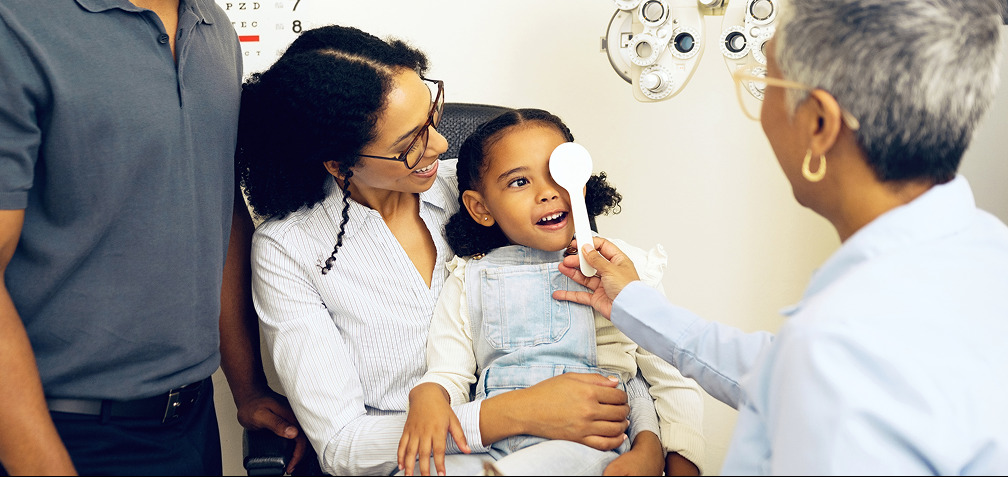
When children see well, they learn well, play well, and move through the world with confidence. But kids don’t always know when something is wrong with their vision—and that’s exactly why regular pediatric eye exams are so important.
Many parents assume that if their child isn’t complaining, there’s no issue. The truth is that children often don’t realize their vision is blurry, especially if only one eye is affected or if amblyopia allows one eye to “take over.” A full eye exam can uncover problems long before they start to impact learning, development, or long-term eye health.
Here’s what parents need to know about early eye care, based on common questions families ask during pediatric visits.
When Should a Child Have Their First Eye Exam?
The American Optometric Association recommends a child’s first eye exam between six and twelve months of age. Children should then receive a comprehensive, “school-ready” exam around age three to four, followed by annual exams once they begin school.
If the exam reveals a condition that needs medical or surgical care, your optometrist will arrange a referral to a pediatric ophthalmologist.
Can You Really Test a Toddler’s Eyes?
Yes. Even if a child can’t read yet, optometrists can still measure vision accurately. They use objective prescription testing that doesn’t rely on verbal answers, including picture-based charts and age-appropriate visual targets. Kids don’t need to know letters or sit still for long periods for the exam to be effective.
Vision Problems Aren’t Always Obvious
Children rarely complain about their vision because they assume what they see is normal. Warning signs can include:
- Squinting
- Frequent eye rubbing
- Sitting very close to screens or books
- Headaches or eye strain
- Avoiding reading or detailed tasks
- Falling behind in school without a clear reason
Sometimes one eye sees clearly while the other does not, which can mask issues without a professional exam.
Why a Full Eye Exam Beats a School Screening
School screenings are helpful, but they are not full exams. They typically check only basic distance vision. A comprehensive pediatric eye exam includes:
- A full evaluation of eye health, front and back
- Binocular vision testing to assess how well the eyes work together
- An accurate prescription, even for very young children
- Checks for issues that affect reading, focus, or alignment
Passing a school screening doesn’t guarantee healthy eyes or proper visual functioning.
Should Kids See a Pediatric Eye Doctor?
Most children can be seen by a family optometrist experienced with young patients—including children as young as two or three. If the exam reveals a condition that needs medical or surgical care, your optometrist will arrange a referral.
Many ophthalmologists require referrals for pediatric patients, so starting with an optometrist is typically the most efficient first step.
Pediatric Eye Exam FAQ
At what age should my child start getting eye exams?
- As early as six months, then again at three or four, and once a year after they start school.
My child isn’t complaining—could they still have a problem?
- Yes. Children often don’t realise their vision is blurry because they don’t know what “normal” vision should look like.
What signs should I watch for?
- Squinting, eye rubbing, sitting close to screens, headaches, avoiding reading, or unexplained school difficulties.
Do toddlers need eye exams even if they can’t read yet?
- Yes. Optometrists use objective testing and picture charts, so reading isn’t required.
Does my child need a pediatric eye doctor?
- Not usually. General optometrists can manage most children’s eye care and will refer out if needed.
If my child passes a school vision screening, do they still need an exam?
- Yes. Screenings don’t assess eye health, eye alignment, or binocular vision—areas essential for comfort and learning.
If I wear glasses, will my child definitely need them too?
- Not always, but the likelihood increases. If both parents are nearsighted, there’s about a 50% chance the child will be as well.
How often should my child have follow-up exams?
- Most children benefit from exams every 6–12 months, especially if they wear glasses or their prescription is changing.
Supporting Clear Vision as Your Child Grows
Regular pediatric eye exams are one of the simplest and most effective ways to support your child’s learning, comfort, and confidence. With routine care, early detection, and child-friendly guidance, optometrists can help children see their world clearly—and thrive because of it.
If it’s been more than a year since your child’s last eye exam, now is an excellent time to book and begin a strong habit of lifelong eye health.
