
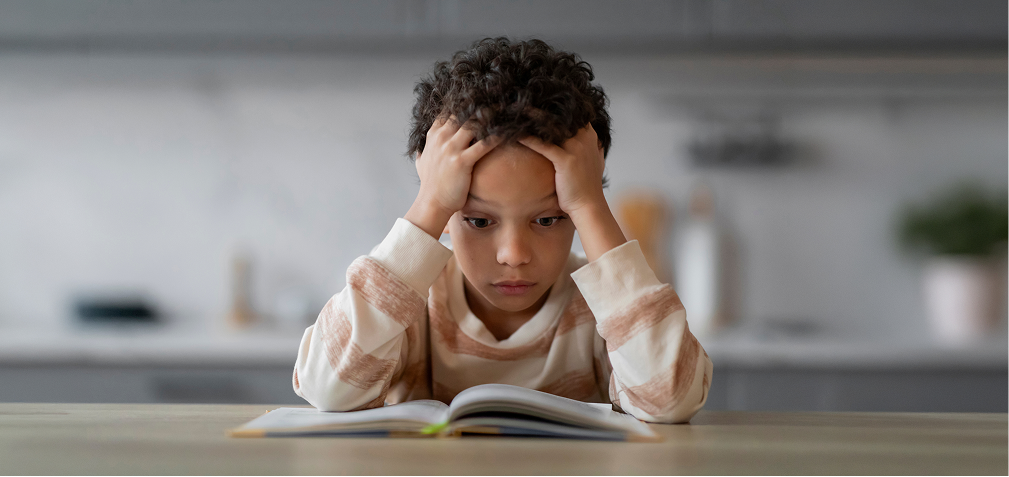
What Is Myopia?
Myopia means your child can see clearly up close but has difficulty seeing objects at a distance. It occurs when the eye grows slightly longer than average. There isn’t one single reason a child becomes myopic; instead, it’s considered a multifactorial condition influenced by both genetics and environment. Today’s children tend to spend more time indoors on screens and devices, and research shows that kids who spend more time outdoors and less time on screens are less likely to become myopic.
Contributing Factors Include:
- Genetics – If both parents are nearsighted, a child has about a 50% chance of becoming nearsighted as well.
- Lifestyle – Children today spend more time indoors on screens and devices. Kids who spend about two hours a day outside and limit screen time are less likely to develop myopia.
Do Children Outgrow Myopia?
Unfortunately, no. Once myopia begins, it typically continues to get worse throughout childhood and is not a reversible condition. This is why early diagnosis and ongoing monitoring are so important.
How We Monitor Myopia
We recommend regular comprehensive eye exams beginning in early childhood, and yearly once your child is in school so that changes can be caught early. Children with myopia are generally seen every 6–12 months, depending on their prescription and how quickly it is changing. A yearly change of 0.25 to 0.50 diopters is considered normal; anything more may require closer follow-up.
For younger children, we may use dilating drops and perform a cycloplegic refraction. This helps relax the focusing system so we can measure the prescription more accurately and avoid over-minusing a strong focuser.
Parents should also look out for:
-
- Squinting while wearing glasses
- Avoiding their glasses
- Complaints of blur or headaches
- Sitting very close to the TV or holding devices close, or rubbing the eyes frequently
Treatment Options for Myopia Management
Granite Pointe Eyecare offers several proven methods to help slow the progression of myopia in children. Our myopia-control options are generally considered similarly effective, and the best choice depends on the child’s age, prescription, comfort level, and lifestyle.
1. Regular Glasses
Standard glasses correct vision, but do not stop myopia from worsening. They are still an essential part of your child’s care to ensure clear, comfortable vision. We also now offer a newer FDA-authorized myopia-control spectacle lens design, the Essilor Stellest lens, which can correct vision and help slow myopia progression.
2. Soft Contact Lenses
Soft contact lenses for myopia control are worn during the daytime for at least 10 hours, 6–7 days a week. These lenses can help slow the progression of myopia while providing clear, glasses-free vision during the day.
3. Orthokeratology (Ortho-K)
Custom hard lenses are worn overnight to temporarily reshape the front of the eye. Once removed in the morning, the child can see clearly throughout the day without glasses or contact lenses, while also benefiting from myopia-control effects.
4. Atropine Eye Drops
A mild dilating drop is used nightly to help slow down myopia progression. Children still require glasses or contacts during the day for clear vision, but the drops can help reduce how quickly the prescription changes.
FAQ: Myopia & Your Child’s Eye Care
Can too much screen time cause myopia?
Is myopia genetic?
How often should my child have an eye exam if they have myopia?
What signs should I look for that might indicate worsening myopia?
If my child doesn’t complain, could they still have a vision problem?
Do school vision screenings replace a full exam?
Will insurance cover myopia management?
Supporting Your Child’s Vision for the Future
Myopia doesn’t just affect how your child sees today — it can influence their long-term eye health. At Granite Pointe Eyecare, we see children as young as 2–3 years old, offer age-appropriate testing even for kids who cannot yet read, and typically pre-book annual exams so nothing falls through the cracks. Our opticians also take time to show you and your child how to care for new glasses and help with adjustments whenever needed.
