
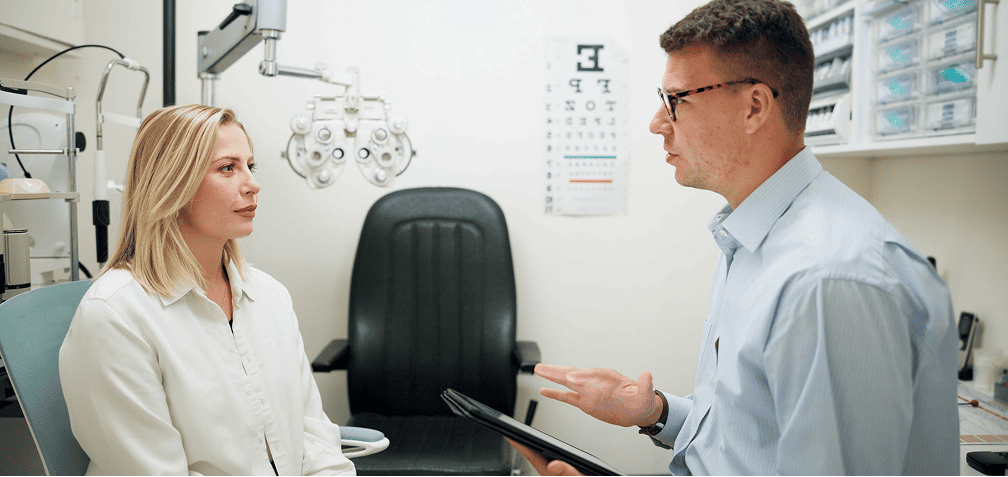
Because your eyes are a highly vascular window into your systemic health, you must monitor how these transformative changes affect your vision. At Granite Pointe Eye Care, An Optometric Corporation, we believe that clarity is an essential part of your journey. True wellness requires a conversation between every part of your body, and your eyes often provide the most critical data during a medical transition.
Understanding GLP-1 RAs and Ocular Risks
As GLP-1 medications become a staple of modern wellness, the medical community is mapping their long-term effects on the body.
In June 2025, the World Health Organization (WHO) and the European Medicines Agency (EMA) between semaglutide and rare ocular risks, recommending that product labels include specific vision warnings. These alerts are based on data suggesting a potential increase in the relative risk of optic nerve conditions for patients with Type 2 diabetes.
Research published in the Review of Optometry suggests that while these medications provide profound benefits, they may be associated with specific retinal shifts.
These findings are a call for coordinated care between your physician and your optometrist rather than a reason for alarm. In a global study of 76,000 cases, researchers noted that semaglutide showed a higher association with ocular adverse event reports compared to common medications like metformin.
The Quiet Messenger: Ozempic and Vision Problems
The optic nerve is the messenger between your world and your mind; it deserves a protector that understands its delicate language. One specific concern raised in clinical reviews is Non-Arteritic Anterior Ischemic Optic Neuropathy (NAION). Often described as a “stroke of the eye,” NAION occurs when blood flow to the front portion of the optic nerve is compromised, leading to sudden, painless vision loss.
While the statistical risk remains very rare, the correlation found in recent studies suggests that patients should be vigilant regarding Ozempic and vision problems. Because NAION involves the posterior ciliary arteries, it is crucial to use advanced imaging to monitor the health of these vital structures. Protecting this messenger is our priority as you navigate your health goals.
The Subtle Signs of Vision Change
Sudden changes are the most obvious, but the eye often whispers before it shouts. Patients starting a GLP-1 regimen sometimes report a “soft blur” that shifts throughout the day, often linked to the lens physically changing shape as glucose levels stabilize. Other indicators include a newfound sensitivity to light, an increase in dry eye irritation, or a persistent feeling of eye fatigue.
Because GLP-1 receptors exist within the retina itself, these signals are your body’s way of asking for a closer look. While many of these symptoms are transient and resolve as the body reaches a new equilibrium, they serve as important data points in your clinical history. We encourage patients to document these changes so we can distinguish between normal adjustment and potential risks.
Weight Loss and Eye Health: The Role of Glucose
The eye is a sensitive organ that mirrors the state of your vascular system with precision. When GLP-1 medications trigger a rapid shift in blood glucose, the change can place temporary stress on the blood vessels within the eye. This phenomenon, known as “early worsening,” occurs when the microvascular environment of the retina struggles to adapt to improved systemic sugar levels.
In some cases, this leads to a temporary progression of diabetic retinopathy as the ocular tissues attempt to recalibrate. Consistency is the foundation of sight, and monitoring weight loss and eye health during these periods of transformation is essential for long-term stability. At Granite Pointe Eye Care, An Optometric Corporation, we track these fluctuations using high-resolution scans to ensure your retina remains resilient.
Proactive Steps for Your Vision Journey
If you are starting a glucagon-like peptide-1 receptor agonist (GLP-1 RA), your vision should be a central part of that conversation from day one. We recommend a comprehensive baseline eye exam before starting treatment, followed by regular monitoring as your dosage and weight stabilize. This allows us to create a map of your eye health to refer back to as your treatment progresses.
It is essential to communicate any sudden changes, such as new floaters, dimmed color perception, or a loss of peripheral sight, to our team immediately. Protecting your eyes ensures that your path to wellness is supported by professional oversight and preventative care.
The Path Forward: Managing Your Care
If an eye health issue is detected, the goal is stabilization through coordinated care. For conditions like worsening retinopathy or macular edema, treatments may include targeted laser therapy or medical injections to manage delicate blood vessels. These interventions are highly effective at preserving sight while allowing you to continue your systemic health treatments.
Collaborative communication with your prescribing physician to manage medication titration is often the most effective approach. This allows the delicate tissues of the eye to catch up with the body’s transformation, reducing the risk of vascular shock. Our role is to act as your advocate, ensuring your medical team is aligned on both your metabolic and ocular health.
The Granite Pointe Approach: Advanced Diagnostics
At Granite Pointe Eye Care Inc, An Optometric Corporation, we pair sophisticated diagnostics with the kind of listening that makes you feel seen before we look at a scan. Our use of OCT (Optical Coherence Tomography) and ERG technology allows us to see beneath the surface, detecting subtle shifts in blood flow before they manifest as vision loss. We believe technology should serve the patient by providing a clear picture that leads to peace of mind.
You deserve the convenience families want, and the clarity patients deserve, wrapped in an experience that honors your unique health journey. By staying at the forefront of medical research regarding GLP-1 medications and eye health, we ensure your vision remains as vibrant as your new lifestyle. Our team is ready to support you with the expert care and advanced tools required for this new era of wellness.
